Simpleleaf Chastetree
Vitex trifolia
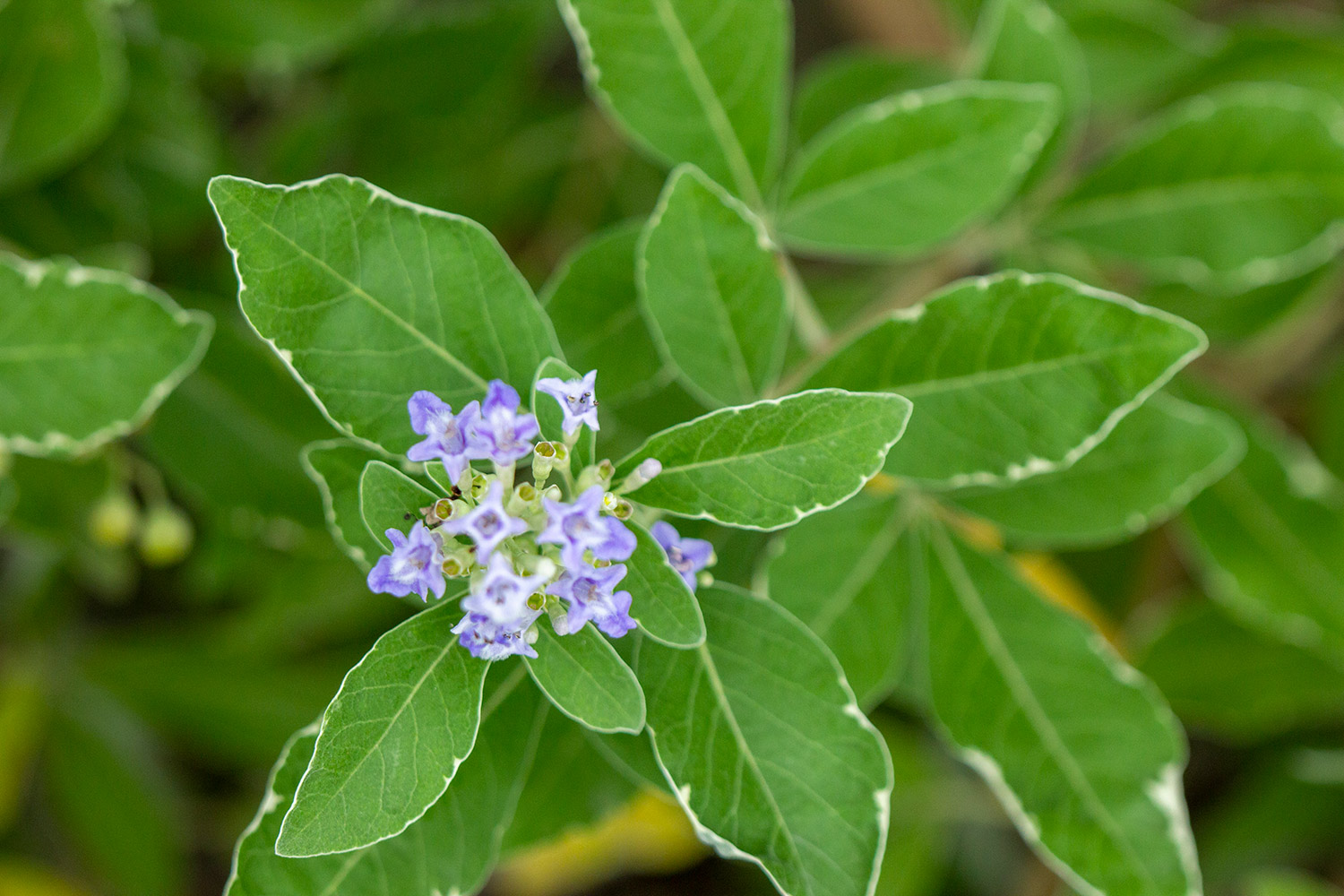
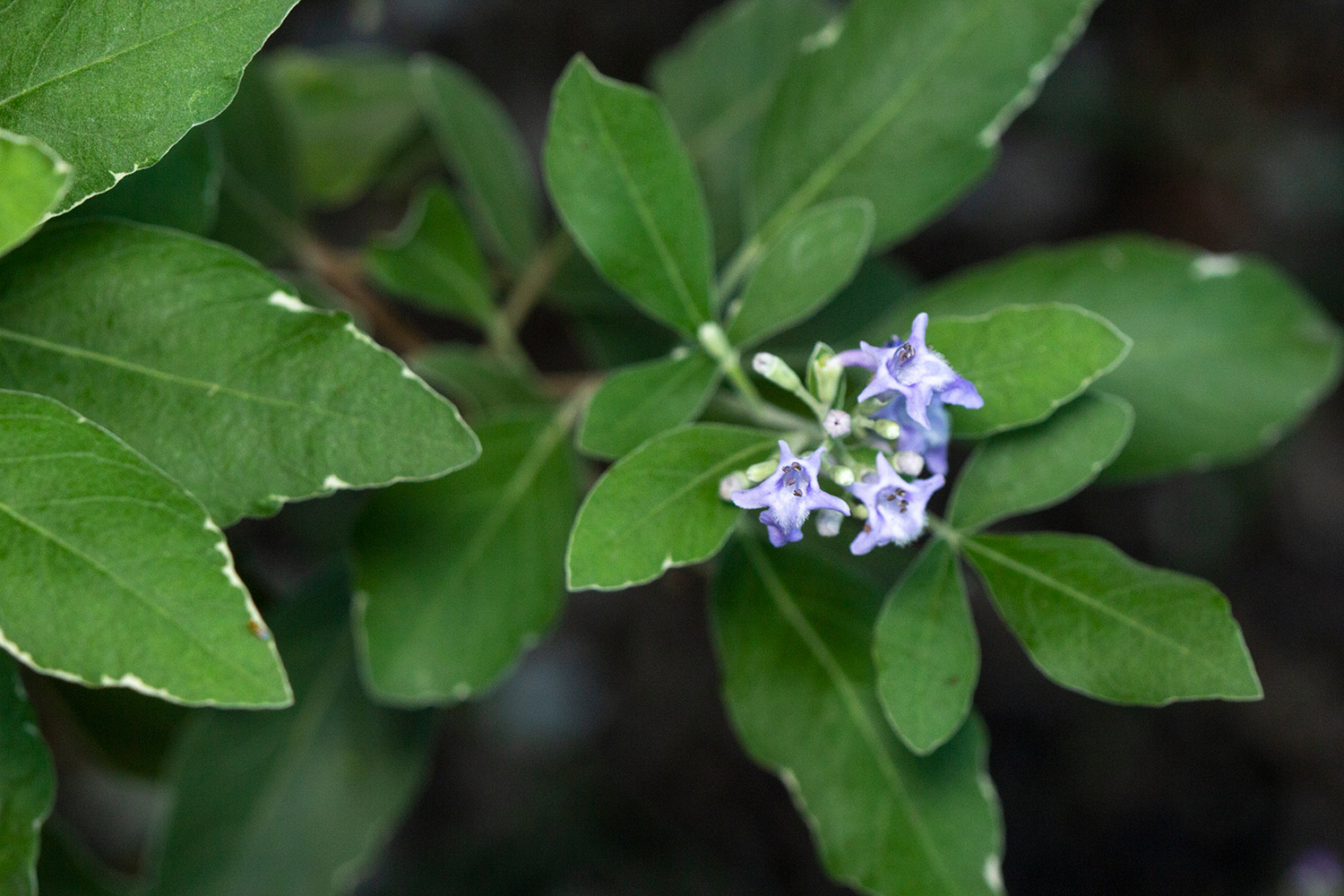
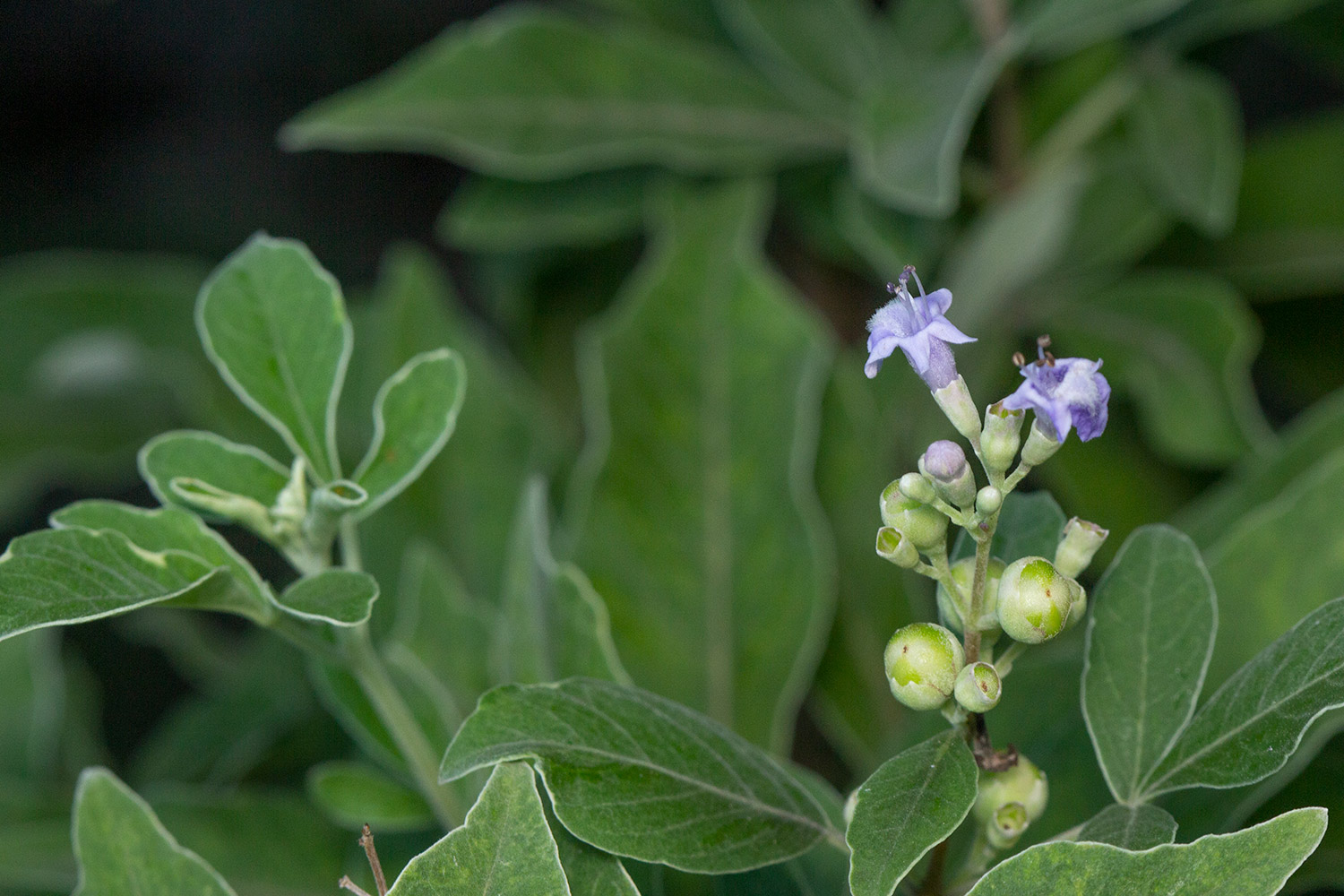
Vitex trifolia is a deciduous shrub or small tree growing from 1 - 4 metres tall. It is sometimes prostate or ascending in habit. The stems are usually procumbent, often rooting at the nodes, and forming mats several metres in diameter.
The plant is gathered from the wild for local medicinal use. It is sometimes cultivated as a hedge plant and is widely grown as an ornamental.
Known Hazards
The plant has been known to trigger various allergic reactions such as sneezing, respiratory problems, dizziness, headache and nausea.
Medicinal
The roots are diaphoretic and diuretic[310
]. A decoction is used in the treatment of fevers and liver diseases. It is also taken after childbirth.
The leaves are anodyne, antiseptic, diuretic, emmenagogue and febrifuge. They are ground with garlic, pepper, turmeric, and boiled rice and then made into pills which are used in the treatment of consumption. The fresh juice is drunk as a remedy for headache.
Fomentations and baths of the leaves are used in the treatment of beriberi.
The leaves are used as a dry fomentation or poultice for treating sprains, contusions, rheumatism and swollen testicles.
The fruit is said to be nervine, cephalic, and emmenagogue. It is prescribed in the form of powder, an electuary, and a decoction[582
]. A decoction of the dried fruits is given in the treatment of common cold, fevers, headache, watery eyes, ophthalmalgia, glaucoma and mastitis.
The fruit contains an acid alkaloid, and colouring matter.
The inner bark is chewed and swallowed as a remedy for dysentery.
Agroforestry Uses:
The plant is often used as a hedge, especially in Asia[317
], although it may trigger various allergic reactions (sneezing, respiratory problems, dizziness, headache, nausea) to people trimming or pruning such hedges.
The plant has been used to control erosion on sand dunes, which it does well within its native range. However, its ability to escape from cultivation, plus its negative effect upon some wildlife, makes it unsuitable for this purpose in other areas.
The plant makes an excellent ground cover.
Other Uses
The leaves contain 0.11 - 0.28% of an essential oil and a resin. The chief constituents of the oil are l-d pinene and camphene, which between them constitute 55% of the oil, there is also 10% terpinyl acetate and 20% of a diterpene alcohol.
The flowers and seeds of the plant are used in the making of leis.
The leaves are burned as an insect/mosquito repellent.
Oils from the leaves show considerable mosquito repellent activity. The active principle has been identified as rotundinal, a cycloterpene aldehyde. The plant shows considerable potential as a botanical pesticide that may be applied both indoors and outdoors[303
].
The wood is used in light construction and for tools and axe handles.
The wood is used for fuel




Sorry, your account does not have access to post comments.