Indian acalypha
Acalypha indica
Acalypha indica (English: Indian acalypha, Indian mercury, Indian copperleaf, Indian nettle, three-seeded mercury) . It is an herbaceous annual that has catkin-like inflorescences with cup-shaped involucres surrounding the minute flowers. It is mainly known for its root being attractive to domestic cats, and for its various medicinal uses. It occurs throughout the Tropics.
An erect annual herb that can be easily distinguished by the cup-shaped involucre that surrounds the small flowers in the catkin-like inflorescence.
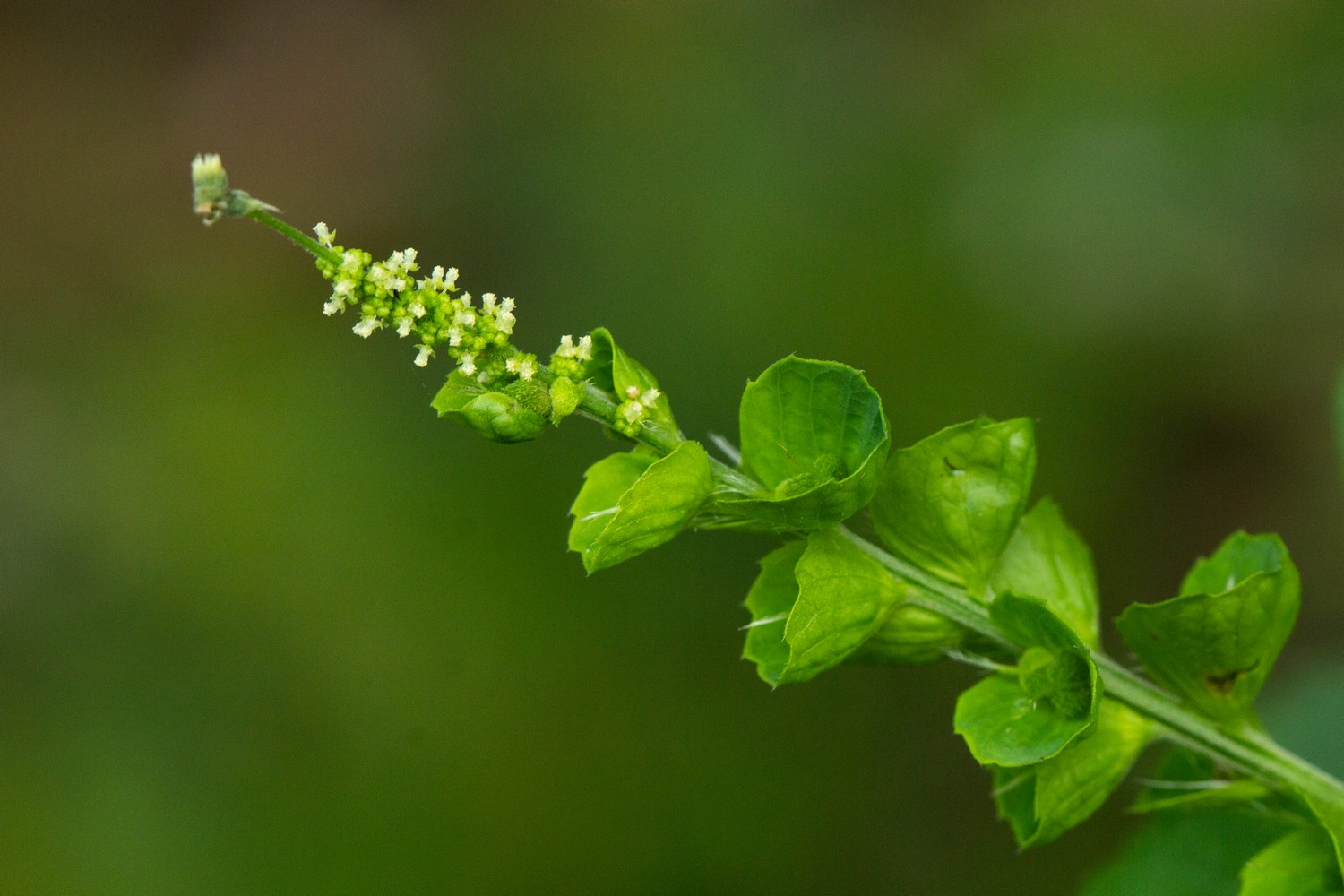
Inflorescence of Indian acalypha. The male flowers are borne on the upper part of the inflorescence are without bracts. Cup-like bract surround the female flowers. (It doesn't have inflorescence hood)
Inflorescence of Indian acalypha.(Inflorescence hood is visible)
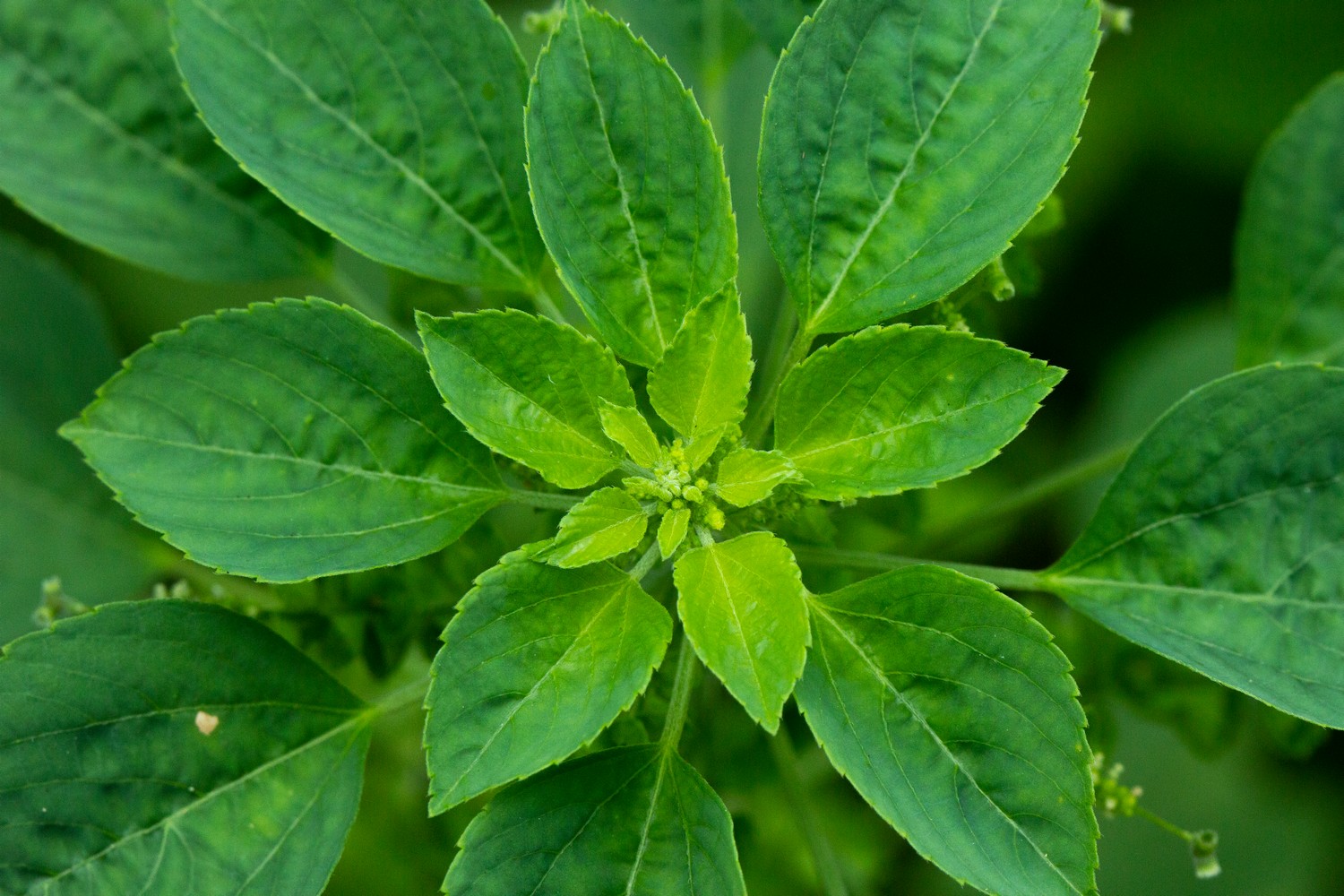
It can grow up to 1.2 m (3.9 ft) tall in favorable circumstances, but is usually smaller. The leaves are broad ovate, 1.2 cm–6.5 cm × 1 cm–4 cm (0.47 in–2.56 in × 0.39 in–1.57 in). The leaf base is rounded to shortly attenuate. The leaf margin is basally 5-nerved and is crenate-serrate with an acute or obtuse apex. The petiole is 1.5–5.5 cm (0.59–2.17 in) long.
Flowers
The flower spikes are axillary, 2.5–6 cm (0.98–2.36 in) long, monoecious, with a rachis terminating in a triradiate hood.
Close up of the inflorescence hood of Indian acalypha
The tiny male flowers are white-green, located on the upper part of the flower spikes, and are ebracteate, minute, and clustered with vermiculiform anthers. The pollens are roughly round and approximately 10–12 microns in diameter.
Pollens of Acalypha indica
The green female flowers are located lower on the spikes, and are subtended by 3–7 mm (0.12–0.28 in) long suborbicular-cuneiform, many-nerved, toothed bracts that are foliaceous.



Sorry, your account does not have access to post comments.