Obscure Morning Glory
Ipomoea obscura
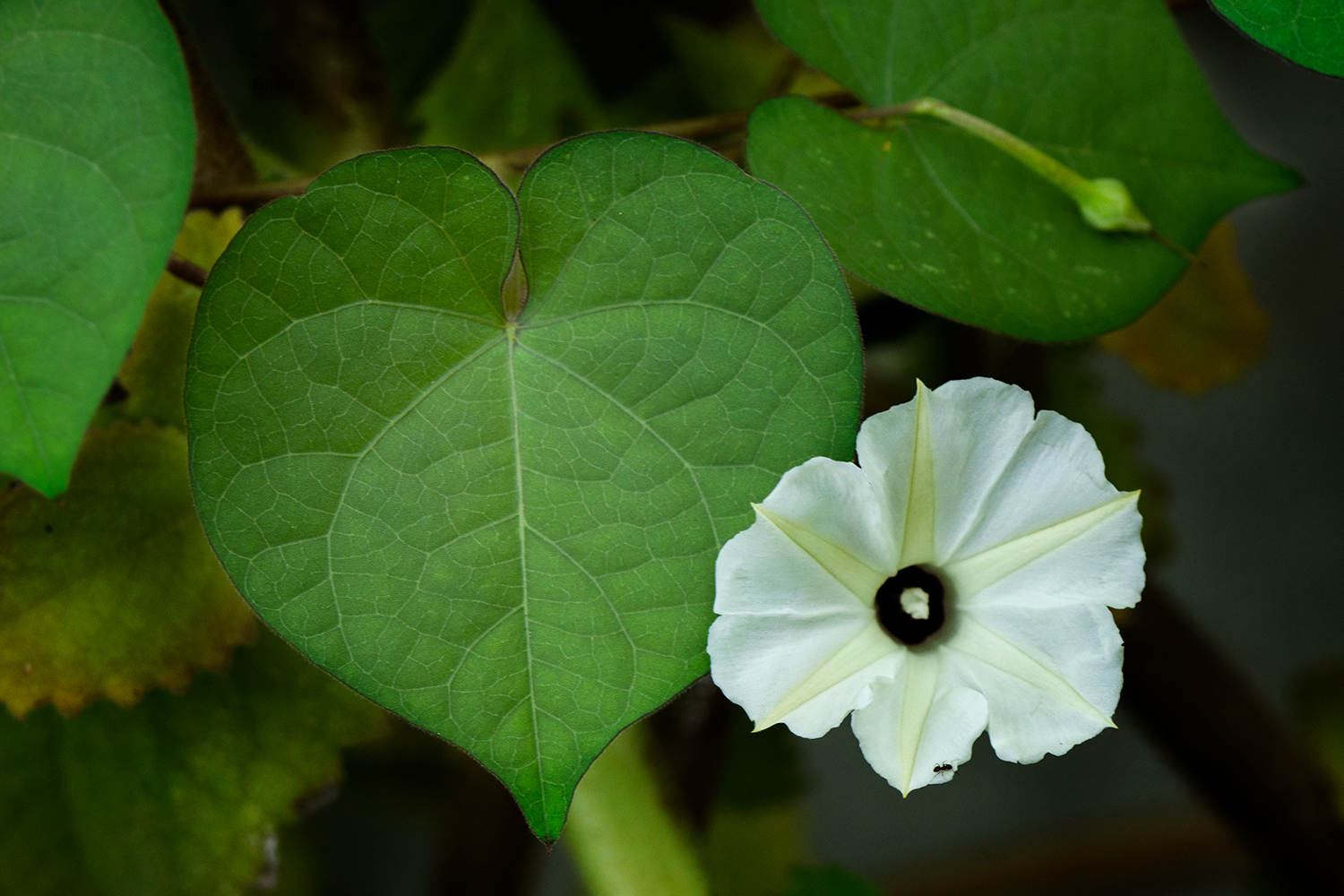
Ipomoea obscura, also known as obscure morning glory or small white morning glory, is a slender twining or trailing vine that grows up to 2–3 meters long. It can be an annual or perennial and is commonly found in disturbed areas, grasslands, coastal regions, open fields, forest edges, and even cultivated areas. In Barbados and the Caribbean, it is often considered an invasive weed.
The plant is known for its attractive, funnel-shaped flowers. The petals are white or pale yellow with darker bands and a purple center, making it a popular ornamental climber in gardens. Its seeds are small, black or brown, and mildly toxic, but the leaves are edible when cooked and are sometimes added to soups or used as a leafy vegetable. The leaves have a pleasant smell and a slightly mucilaginous texture.
The obscure morning glory also has a long history of traditional medicinal use. The dried leaves contain compounds with antioxidant and anti-inflammatory properties and have shown some ability to inhibit the growth of tumor cells in lab studies. Folk remedies include using the leaf sap to calm fits of insanity, applying a leaf paste to soothe sores and pustules, and using powdered leaves to treat mouth ulcers.
The Obscure Morning Glory is a hardy, sun-loving vine that thrives in well-drained soils. While valued for its beauty and medicinal uses, it can easily spread and become weedy, especially in tropical and subtropical environments.
https://en.wikipedia.org/wiki/Ipomoea_obscura



Sorry, your account does not have access to post comments.