Sea purslane
Sesuvium portulacastrum
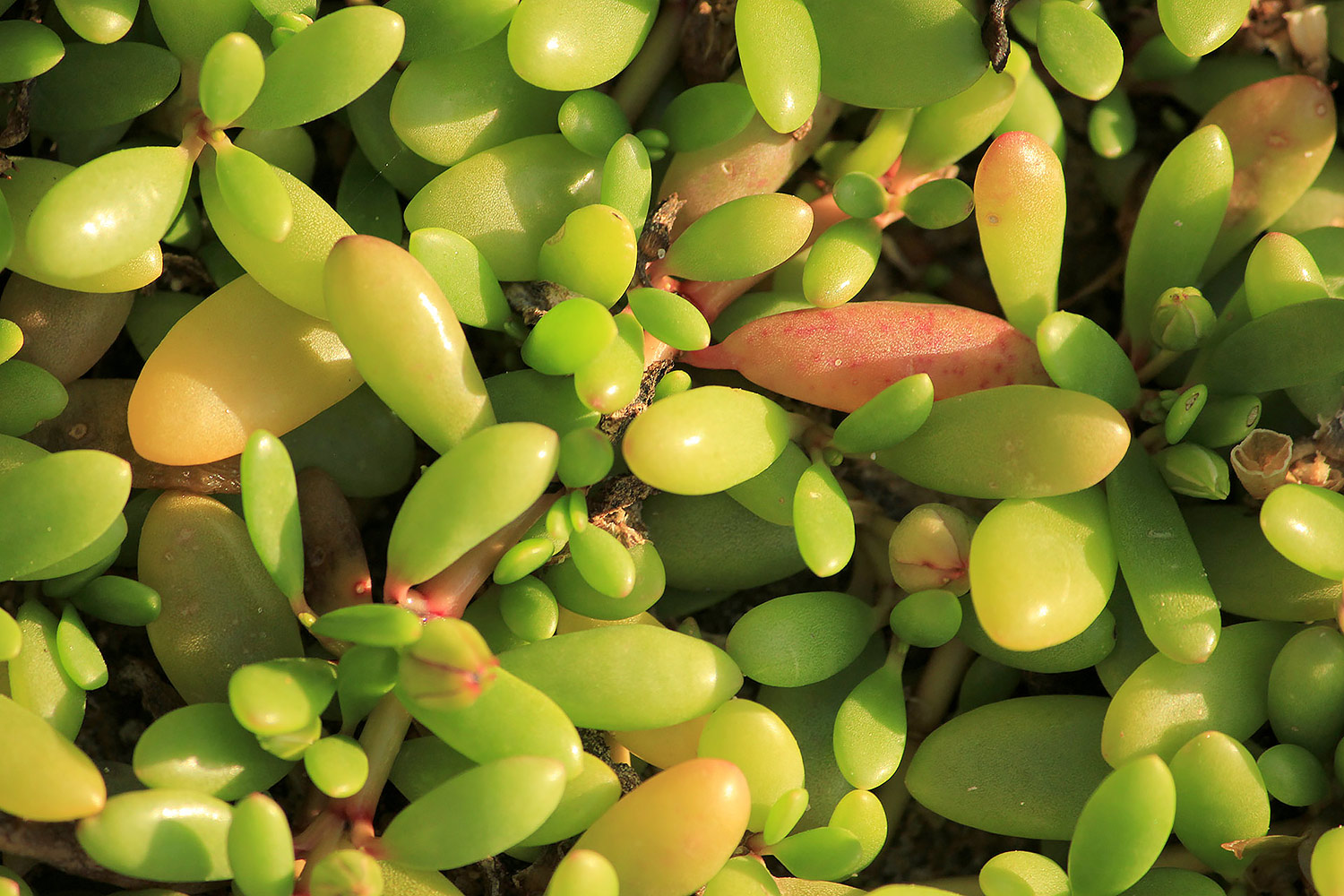
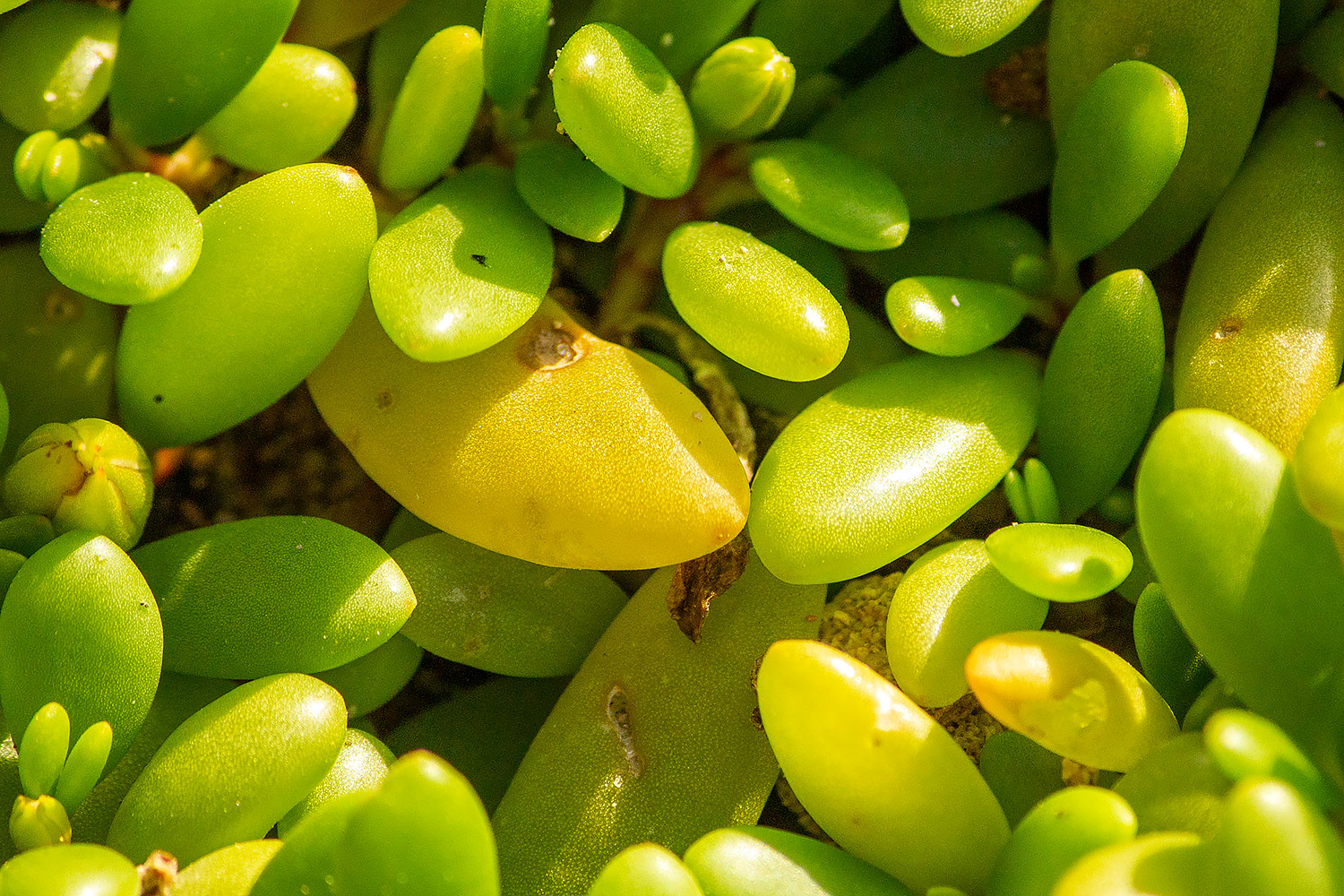
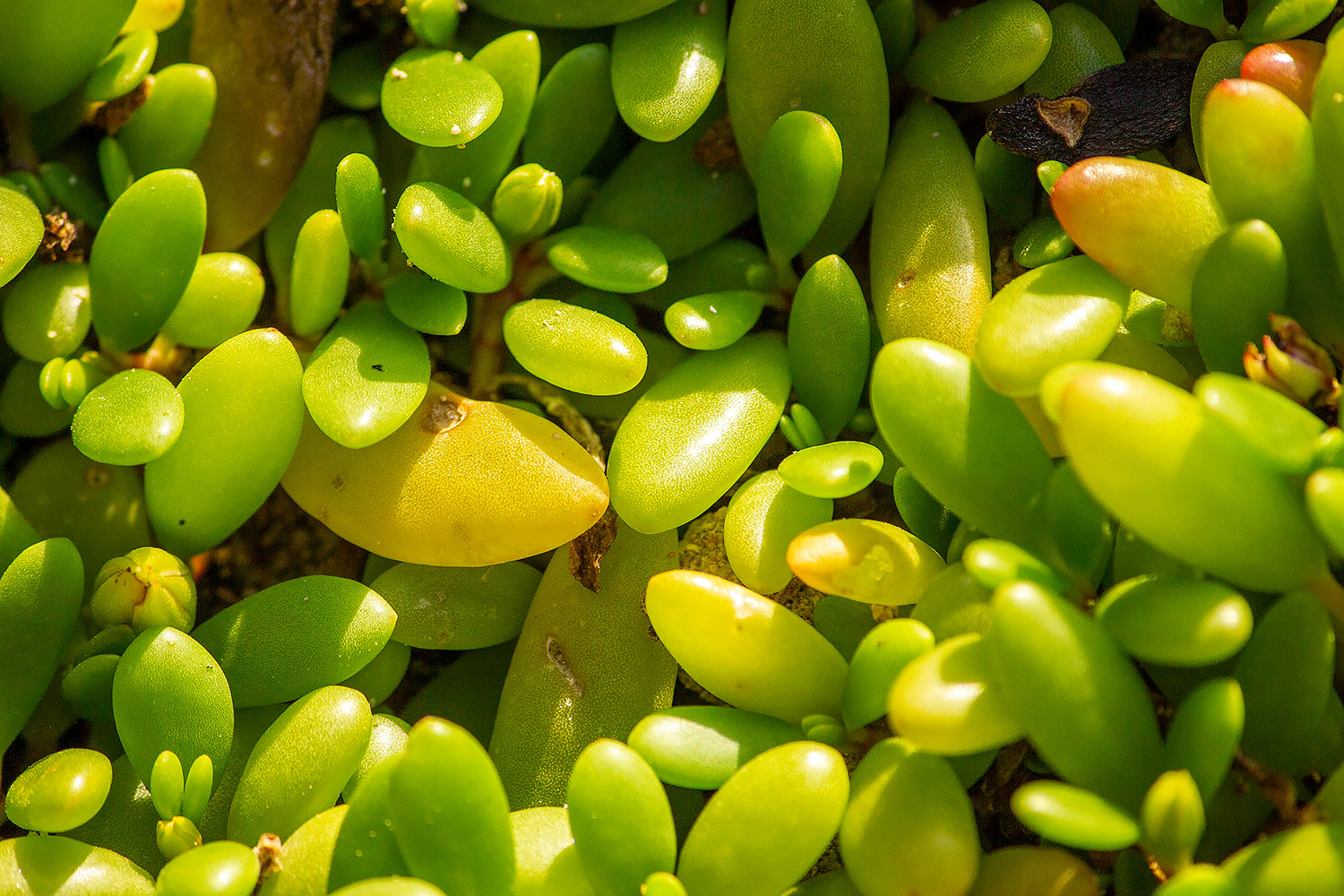
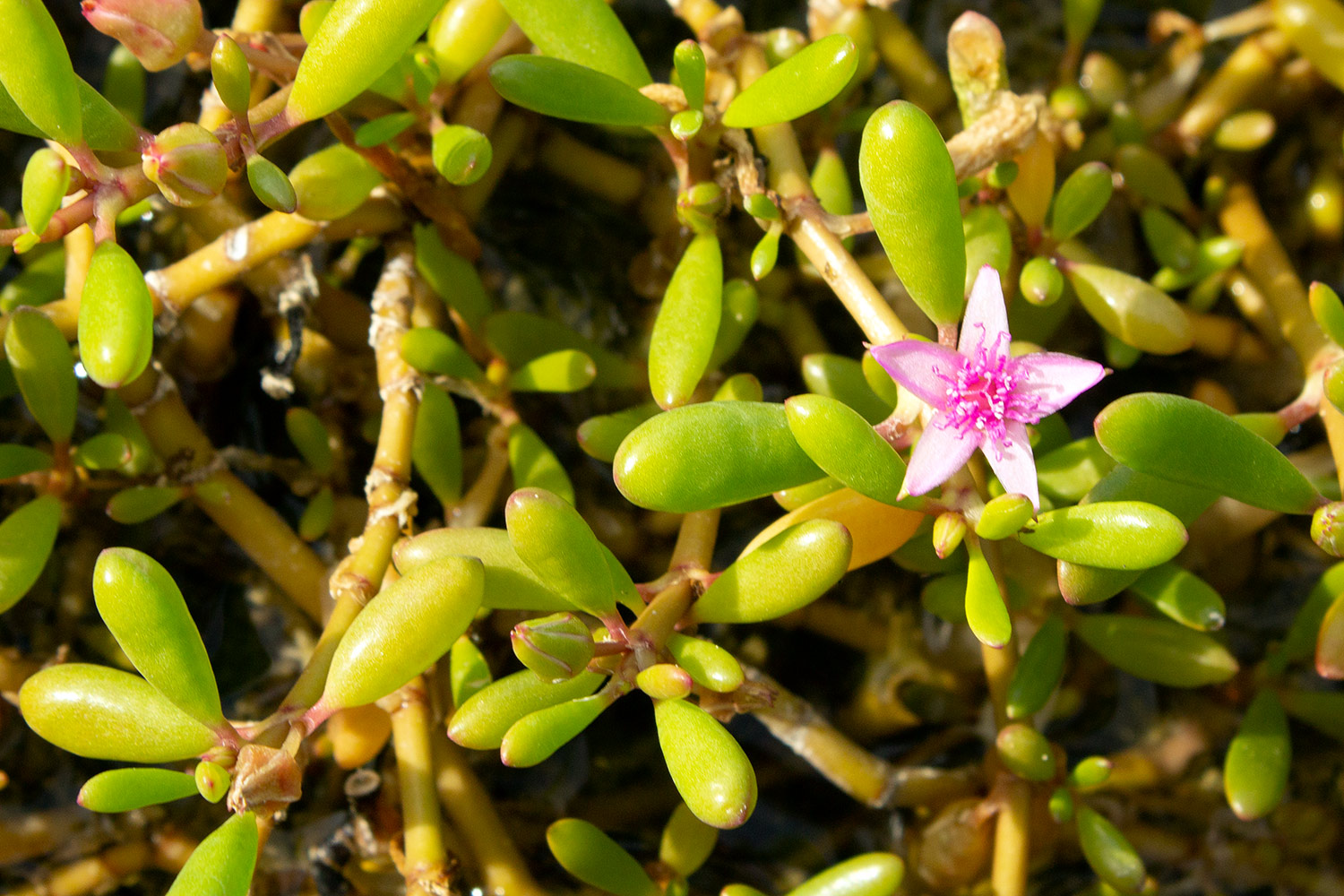
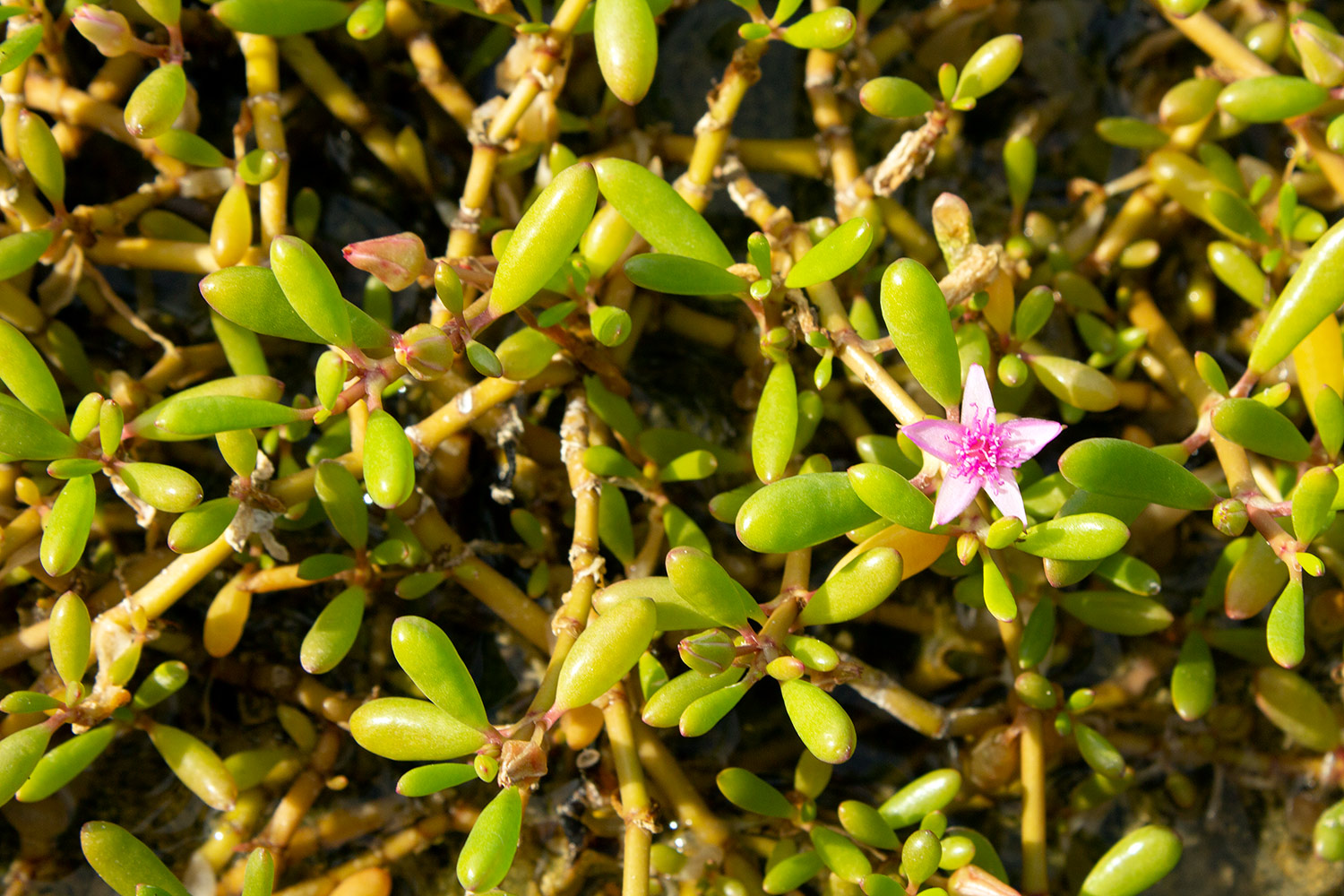
Sesuvium portulacastrum, better known as Sea Purslane, is a tough little coastal succulent that spreads across beaches, mangroves, and salty flats almost anywhere it can take root. It grows low to the ground, usually no more than about 30 cm tall, with smooth, fleshy stems that can stretch close to a metre. Its leaves are thick, glossy, and distinctly succulent—sometimes oval, sometimes narrow and lance-shaped—but always built to handle sun and salt.
The plant produces small pink-purple flowers that pop out from the leaf joints. They’re tiny, only about half a centimetre across, and they fold up for the night or whenever the sky turns grey. Bees and moths tend to handle the pollination. After flowering, Sea Purslane forms little round capsules filled with tiny black seeds that surprisingly don’t float.
People around the world have used Sea Purslane as a salty vegetable for generations. Eaten raw, the leaves are crisp with a natural briny flavour and a slight bitterness or tang, making them great for pickling. Cooking softens both the texture and the taste, and they work well in savoury dishes or as a garnish. The leaves are high in vitamin C and contain ecdysterone, and the plant has been used traditionally for stopping bleeding and even for treating venomous bites.
Sea Purslane is one of the easiest coastal plants to grow. It loves full sun, sandy ground, and salt, and it doesn’t need much care. It’s drought-tolerant, thrives in harsh conditions, and rarely has issues with pests. Harvesting is simple—just pinch off fresh stems or pull up a few pieces whenever you need them.
Order: Caryophyllales
Family: Aizoaceae
Genus: Sesuvium
Species: S. portulacastrum
Binomial name: Sesuvium portulacastrum



Sorry, your account does not have access to post comments.